Blog
Technology is no longer a niche subject reserved for engineers and specialists. It is woven into nearly every aspect of daily life, from the smartphone in your pocket to the cloud services that stream your favorite shows. Yet for many people, the sheer pace of innovation can feel overwhelming. New terms appear constantly — artificial intelligence, 5G, smart homes, cybersecurity — and it can be hard to know which ones actually matter. This page serves as a starting point for understanding the world of technology and high-tech in plain, accessible language, whether you are a complete beginner or simply want to stay informed.
What Does « High-Tech » Actually Mean?
The term high-tech describes technologies based on the most advanced scientific and engineering knowledge available at a given time. Unlike traditional tools, high-tech products typically involve sophisticated research, miniaturized components, and continuous software updates. A washing machine is technology; a washing machine that connects to Wi-Fi, diagnoses its own faults, and optimizes water usage based on load patterns is high-tech.
What makes a product genuinely « high-tech » is less about marketing labels and more about three characteristics:
- Advanced research and development: the product relies on recent scientific breakthroughs, such as semiconductors, machine learning, or new materials.
- Rapid evolution: capabilities improve significantly over short periods, often through software rather than hardware changes.
- Connectivity: modern devices rarely work in isolation; they communicate with other devices, services, and users.
Understanding this distinction helps you evaluate products more critically. A gadget marketed as « smart » is not automatically useful — the real question is whether its advanced features solve a problem you actually have.
The Major Pillars of Modern Technology
To navigate the tech landscape, it helps to group innovations into a few broad categories. Each one evolves on its own, but they increasingly overlap and reinforce one another.
Computing and Consumer Devices
Smartphones, laptops, tablets, and wearables remain the most visible face of technology. The key trends in this area include longer battery life, more powerful processors in smaller form factors, and improved displays. When choosing a device, most experts recommend focusing on your actual usage: a student writing essays has very different needs from a video editor or a casual browser. Comparing specifications such as processor generation, RAM, and storage type (SSD versus older mechanical drives) gives you a far better picture than brand names alone.
Artificial Intelligence and Automation
Artificial intelligence (AI) has moved from research labs into everyday applications. It powers voice assistants, spam filters, photo organization, translation tools, and increasingly sophisticated writing and image-generation systems. In simple terms, AI refers to software that learns patterns from data rather than following only pre-programmed rules.
For everyday users, the practical takeaway is this: AI tools are best treated as assistants, not authorities. They can draft emails, summarize documents, and answer questions quickly, but their outputs should always be verified, especially for factual or high-stakes matters.
Connectivity and Networks
Modern high-tech depends on fast, reliable connections. Technologies such as fiber internet and 5G mobile networks have dramatically increased speeds and reduced delays, enabling everything from high-definition video calls to cloud gaming. A useful analogy: if devices are workers, the network is the road system connecting them. Better roads mean faster deliveries, no matter how capable the individual workers are.
Cloud Services and Software
The cloud refers to computing resources — storage, processing power, applications — delivered over the internet rather than running entirely on your own device. This is why you can access your files from any computer or back up photos automatically. Cloud services bring clear advantages: automatic updates, remote access, and easy collaboration. They also raise legitimate questions about privacy and dependence on subscriptions, which we address below.
Smart Homes and the Internet of Things
The Internet of Things (IoT) describes everyday objects fitted with sensors and internet connections: thermostats, doorbells, light bulbs, speakers, and even refrigerators. These devices can save energy, improve security, and add convenience. However, each connected device is also a potential entry point into your home network, which makes basic security practices essential.
How to Choose Technology Wisely
With thousands of products competing for attention, a structured approach prevents expensive mistakes. Rather than chasing the latest release, consider the following process:
- Define your real need. Write down the specific task or problem the technology should solve. « Faster video calls with family abroad » is a need; « a better gadget » is not.
- Set a realistic budget. Include hidden costs such as subscriptions, accessories, and potential repairs.
- Compare specifications, not slogans. Look at measurable features: battery capacity, processor generation, storage type, warranty length.
- Read independent reviews. Seek out testers who publish their methods and compare multiple sources rather than relying on a single opinion.
- Check longevity. How long will the manufacturer provide software updates? A device that stops receiving security patches becomes a risk, whatever its original quality.
Consider a fictional but realistic example: Maria, a freelance graphic designer, wanted a new laptop. The flashiest model on the market was a gaming machine with impressive numbers, but after listing her needs — color-accurate screen, quiet operation, all-day battery — she chose a more modest ultrabook that served her better for years. Matching specifications to use cases almost always beats buying the most powerful option available.
Digital Security: Protecting Yourself Online
As technology becomes central to banking, work, and communication, security is no longer optional. The good news is that effective protection does not require technical expertise. A small set of habits covers the vast majority of everyday risks:
- Use strong, unique passwords for every account, ideally managed through a password manager.
- Enable two-factor authentication wherever it is offered, especially for email and financial accounts.
- Keep software updated, since updates frequently patch security vulnerabilities.
- Be skeptical of urgent messages. Phishing — fraudulent messages impersonating banks, delivery services, or government agencies — remains the most common attack. Legitimate organizations rarely ask for passwords or urgent payments via email or text.
- Secure your home network by changing default router passwords and using modern Wi-Fi encryption.
Think of digital security like home security: you cannot make burglary impossible, but strong locks, good habits, and basic awareness deter the overwhelming majority of opportunistic threats.
Privacy in a Connected World
Beyond security lies the question of privacy: who collects your data, and what do they do with it? Every app installation, website visit, and smart-device interaction can generate data. In many English-speaking countries, regulations now give consumers meaningful rights, including the ability to request what data companies hold and to opt out of certain forms of data selling.
Practically, you can take control through small, consistent actions:
- Review app permissions regularly and revoke access that serves no purpose — a calculator rarely needs your location.
- Adjust privacy settings on major platforms; defaults tend to favor data collection over user control.
- Prefer services with transparent data policies, even when they cost slightly more.
Privacy is not about paranoia; it is about making deliberate choices rather than accepting every default.
Emerging Trends Worth Watching
While no one can predict the future with certainty, several directions are shaping the next phase of consumer and professional technology:
- AI integration everywhere: AI features are becoming embedded in ordinary software — search engines, office suites, photo editors — rather than existing as standalone products.
- Energy efficiency and sustainability: manufacturers face growing pressure to extend device lifespans, offer repair options, and reduce electronic waste.
- Health technology: wearables that track sleep, heart rhythm, and activity are increasingly used alongside — not instead of — medical professionals.
- Cutting-edge connectivity: improvements in network speed and reliability continue to unlock new uses, from remote healthcare to immersive entertainment.
A healthy attitude toward trends is selective curiosity: follow developments in areas relevant to your life, and ignore the rest. Not every innovation deserves your attention or your money.
Getting Comfortable with Technology at Your Own Pace
Perhaps the most important message on this page is reassuring: you do not need to master everything. Even seasoned professionals specialize in narrow slices of the tech world. What matters is building a foundation of reliable habits — evaluating products methodically, securing your accounts, managing your privacy — and staying curious within the areas that genuinely affect you.
Start small. Pick one improvement this month, whether it is setting up a password manager, decluttering your device storage, or finally understanding what your smart speaker does with recordings. Technology rewards incremental learning far more than frantic catch-up. The articles throughout this blog are designed to accompany that journey, one topic at a time, always with the aim of making technology feel less like a pressure and more like a tool that serves you.
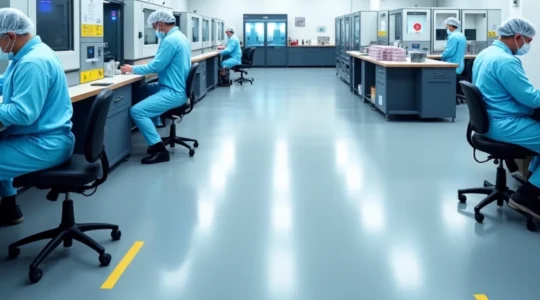
Essential ESD protection materials for electronics manufacturing
Electrostatic discharge (ESD) poses a significant threat to electronic components during manufacturing processes. With modern microelectronics becoming increasingly sensitive to static electricity, even discharges as…
Lire la suiteUnlock your coding potential: a guide to programming
Dive into the mesmerizing world of programming and unlock limitless potential. This comprehensive guide aims to chart a clear path for aspiring coders, starting from…
Lire la suiteHow to set up your new tech devices efficiently ?
Unveiling modern technology and learning to efficiently set up new tech devices can often be a challenging task. This guide will assist businesses in selecting…
Lire la suiteTechnologies driving the development of smart cities
Technological advancements are transforming cities around the globe into interconnected, efficient, and sustainable environments. The world witnesses a blend of innovative gadgets, digital innovations, and…
Lire la suiteUrban evolution: the rise of smart cities and their impact
In the midst of rapid technological advancements, urban landscapes are transforming into hubs of innovation, giving rise to the phenomenon known as the development of…
Lire la suiteInnovative technical parts manufacturing for the modern industry
Navigating the landscape of modern industry, the manufacturing of innovative technical parts stands at the forefront of technological advancements. Embracing digital twin technology, manufacturers have…
Lire la suiteChoosing the right enterprise software for your business
Navigating the complex world of enterprise software can be a challenging task for many businesses. Determining the right solution requires a clear understanding of your…
Lire la suiteProtect your data: essential security measures for businesses
In an era where data breaches are increasingly common, businesses must prioritize robust security measures to safeguard their invaluable data. Data protection is no longer…
Lire la suite5 effective process automation tools for businesses
Process automation, a modern business game-changer, empowers companies by streamlining operations, enhancing efficiency, and maximizing productivity. In today’s fast-paced digital world, being armed with effective…
Lire la suiteHigh durability and fast assembly with flex PCBs
Delving into the world of modern electronics, the role of flex PCBs has been pivotal. Offering high durability and rapid assembly, these flexible circuits have…
Lire la suite